
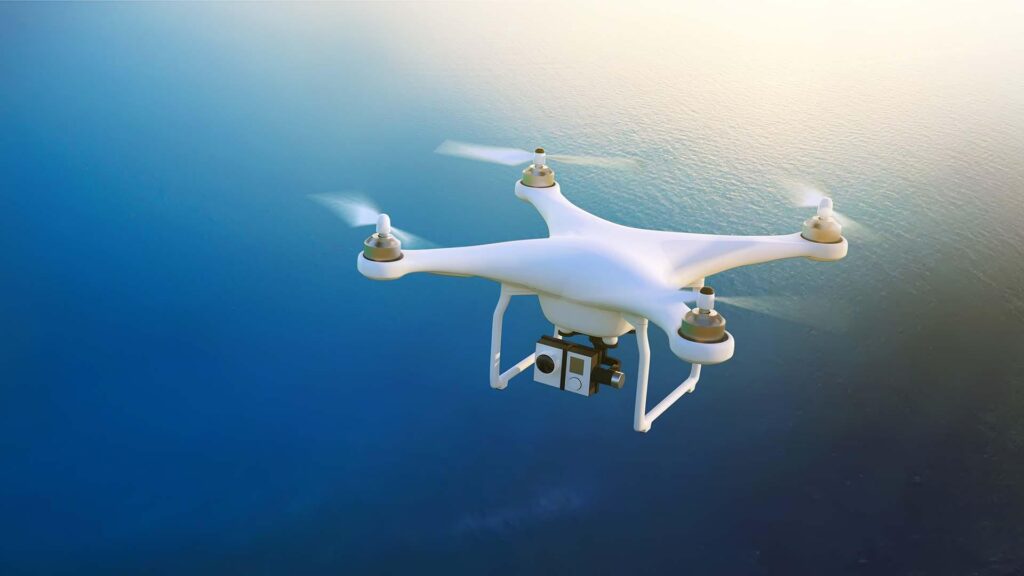
Embark on a captivating journey into the realm of Space Drones, where human ingenuity meets the boundless expanse of the cosmos. In an era characterized by relentless technological innovation and the insatiable quest for exploration, Space Drones emerge as the vanguard of humanity’s foray into the unknown. These unmanned spacecraft, equipped with state-of-the-art technology and scientific instruments, traverse the depths of space, unveiling the mysteries of distant planets, moons, and celestial phenomena.
The concept of Space Drones represents a convergence of diverse disciplines, from aerospace engineering and robotics to artificial intelligence and planetary science. With each mission, these marvels of modern engineering push the boundaries of possibility, offering unprecedented insights into the universe and reshaping our understanding of cosmic phenomena.
From the rugged terrain of Mars to the icy moons of Jupiter, Space Drones navigate treacherous environments with precision and agility, gathering invaluable data that fuels scientific discovery and propels humanity toward new frontiers. Join us as we embark on a voyage of discovery, guided by the spirit of exploration and fueled by the limitless potential of Space Drones.
Key Takeaways
- Revolutionizing Exploration: Space Drones represent a paradigm shift in space exploration, offering a cost-effective and efficient means of probing distant planets and celestial bodies.
- Technological Advancements: Breakthroughs in robotics, artificial intelligence, and miniaturization have empowered Space Drones with unprecedented autonomy and versatility, enabling them to navigate complex environments and execute intricate tasks with precision.
- Diverse Applications: From planetary exploration to orbital surveillance and astronomical observation, Space Drones serve a multitude of purposes, ranging from scientific research to resource prospecting and infrastructure maintenance.
- Future Prospects: As technological advancements continue to accelerate, the future of space exploration holds boundless possibilities, with Space Drones poised to play a central role in humanity’s quest to colonize and harness the resources of the cosmos.
- Challenges and Opportunities: While the path ahead is fraught with challenges, including technological limitations and operational risks, the potential rewards of space exploration are vast, offering profound insights into the origins and evolution of the universe.
The Evolution of Space Drones
Origins and Early Development
The inception of Space Drones can be traced back to the early days of space exploration, marked by pioneering efforts and monumental achievements. From the launch of the first artificial satellite, Sputnik, by the Soviet Union in 1957 to the iconic Voyager probes sent by NASA to explore the outer reaches of our solar system, the evolution of Space Drones is a testament to human ingenuity and determination.
Advancements in Robotics and AI
In recent decades, rapid advancements in robotics and artificial intelligence have propelled Space Drones to new heights of sophistication and capability. Today’s spacecraft are equipped with cutting-edge AI algorithms that enable them to autonomously navigate through space, analyze complex data, and make real-time decisions without human intervention.
Origins and Early Development
The origins of Space Drones can be traced back to the early years of the Space Age, a period characterized by intense competition between the United States and the Soviet Union. In 1957, the Soviet Union stunned the world with the launch of Sputnik, the first artificial satellite to orbit Earth. This historic achievement marked the dawn of the space exploration era and laid the foundation for future missions beyond Earth’s atmosphere.
Throughout the 1960s and 1970s, both superpowers engaged in a series of ambitious space exploration projects, culminating in the Apollo moon landings and the launch of robotic probes to explore other planets in our solar system. NASA’s Voyager mission, launched in 1977, provided unprecedented insights into the outer planets and interstellar space, revolutionizing our understanding of the cosmos.
The development of Space Drones during this period was driven by the need to explore and study celestial bodies beyond the reach of human astronauts. These early spacecraft were relatively simple by today’s standards, consisting of basic instrumentation and propulsion systems. However, they laid the groundwork for future advancements in space exploration and paved the way for the sophisticated Space Drones of today.
Advancements in Robotics and AI
Advancements in robotics and artificial intelligence (AI) have played a pivotal role in shaping the evolution of Space Drones, enabling them to perform increasingly complex tasks with unprecedented efficiency and autonomy. In the early days of space exploration, spacecraft were largely controlled by ground-based operators, who manually programmed their movements and monitored their systems in real-time.
However, as technology advanced, spacecraft became more autonomous, relying on onboard computers and sensors to navigate through space and execute scientific experiments. Today’s Space Drones are equipped with sophisticated AI algorithms that enable them to analyze vast amounts of data, make decisions in real-time, and adapt to changing conditions without human intervention.
One of the key challenges in developing autonomous Space Drones is ensuring their ability to operate reliably in the harsh and unpredictable environment of space. To address this challenge, engineers and scientists have developed advanced sensing and navigation systems that allow spacecraft to accurately determine their position and orientation relative to other objects in space.
Applications of Space Drones
Planetary Exploration
Space Drones play a pivotal role in planetary exploration, venturing into the depths of our solar system and beyond to study the geology, atmosphere, and potential for life on other planets and moons.
Orbital Surveillance and Maintenance
In addition to planetary exploration, Space Drones are utilized for orbital surveillance and maintenance tasks around Earth and other celestial bodies, including monitoring space debris, inspecting satellites for damage, and performing repairs.
Planetary Exploration
Planetary exploration represents one of the primary applications of Space Drones, as they enable scientists to study the geology, atmosphere, and potential for life on other planets and moons in our solar system and beyond. From the barren landscapes of Mars to the icy moons of Jupiter and Saturn, Space Drones have ventured to some of the most remote and inhospitable environments in the universe, gathering invaluable data that has revolutionized our understanding of the cosmos.
One of the most famous examples of planetary exploration is NASA’s Mars rovers, including Spirit, Opportunity, and Curiosity, which have spent years traversing the Martian surface, conducting experiments, and searching for signs of past or present life. These robotic emissaries have provided unprecedented insights into the geology and climate of Mars, revealing evidence of ancient lakes, rivers, and even organic molecules.
In addition to Mars, Space Drones have also explored other planets and moons in our solar system, such as Venus, Jupiter, Saturn, and their moons. These missions have revealed a diverse array of landscapes, from towering volcanoes and deep canyons to vast oceans and icy plains, and have raised tantalizing questions about the potential for life beyond Earth.
Orbital Surveillance and Maintenance
In addition to planetary exploration, Space Drones are utilized for a variety of orbital surveillance and maintenance tasks around Earth and other celestial bodies. These tasks include monitoring space debris, inspecting satellites for damage, and performing repairs to ensure the continued operation of critical infrastructure in space.
Space debris poses a significant risk to spacecraft and satellites in orbit around Earth, as even small pieces of debris traveling at high speeds can cause serious damage upon impact. To mitigate this risk, Space Drones equipped with cameras and sensors are deployed to track and monitor debris, allowing operators to predict potential collisions and take evasive action if necessary.
In addition to monitoring space debris, Space Drones are also used to inspect satellites for damage and perform maintenance tasks such as refueling and repairing malfunctioning components. These missions are critical for ensuring the continued operation of satellites used for communication, navigation, weather forecasting, and other important applications.
Future Prospects and Challenges
Expanding Horizons
The future of Space Drones holds boundless possibilities, from ambitious missions to distant planets to the establishment of permanent habitats beyond Earth. As technological advancements continue to accelerate, we stand on the brink of a new era of space exploration, where the cosmos beckons with tantalizing opportunities and challenges.
Addressing Technological Limitations
However, realizing this vision is not without its challenges. Space exploration remains inherently risky and demanding, requiring breakthroughs in propulsion, energy storage, and life support systems. Overcoming these technological limitations will be paramount to unlocking the full potential of Space Drones and expanding humanity’s presence in the cosmos.
Expanding Horizons
The future of Space Drones is filled with exciting possibilities as humanity sets its sights on venturing further into the cosmos. Ambitious missions to distant planets, moons, and asteroids are on the horizon, fueled by advancements in propulsion technology, spacecraft design, and mission planning.
One of the most anticipated missions in the coming years is NASA’s Artemis program, which aims to return astronauts to the Moon by the mid-2020s and establish a sustainable human presence on the lunar surface. Space Drones will play a crucial role in this endeavor, assisting with tasks such as resource prospecting, habitat construction, and scientific research.
Beyond the Moon, Space Drones are poised to explore other destinations in our solar system, including Mars, the moons of Jupiter and Saturn, and even distant asteroids and comets. These missions will provide invaluable insights into the geological history, atmospheric composition, and potential for life on other worlds, paving the way for future human exploration and colonization efforts.
Addressing Technological Limitations
Despite the promise of future exploration, Space Drones face a myriad of technological challenges that must be overcome to ensure their success. Chief among these challenges is the development of advanced propulsion systems capable of delivering spacecraft to distant destinations in a timely and cost-effective manner.
Traditional chemical propulsion systems, while reliable, are limited in their ability to travel long distances efficiently. Alternative propulsion technologies, such as ion engines, nuclear thermal propulsion, and solar sails, offer potential solutions to this problem but pose their own engineering and logistical challenges.
In addition to propulsion, Space Drones must also address challenges related to power generation, communication, and life support systems. Spacecraft operating in the harsh environment of space require robust power sources capable of providing energy for extended durations, as well as reliable communication systems, to maintain contact with mission control on Earth.
The Role of Space Drones in Scientific Research
Advancing Our Understanding of the Universe
Space Drones play a pivotal role in advancing our understanding of the universe by conducting scientific research in space. From studying the origins of galaxies to unraveling the mysteries of dark matter and dark energy, these robotic explorers enable scientists to conduct experiments and observations that would be impossible from Earth.
Contributing to Climate Studies and Environmental Monitoring
In addition to astronomical research, Space Drones contribute to climate studies and environmental monitoring by providing data on Earth’s atmosphere, oceans, and land surfaces. By measuring key parameters such as temperature, humidity, and carbon dioxide levels from orbit, these spacecraft help scientists track changes in the Earth’s climate and monitor the health of ecosystems around the world.
Advancing Our Understanding of the Universe
Space Drones serve as indispensable tools for advancing our understanding of the universe by conducting scientific research in the vast expanse of space. Equipped with a variety of sensors, cameras, and instruments, these robotic explorers are capable of conducting a wide range of experiments and observations that would be impossible from Earth.
One of the key areas of research enabled by Space Drones is the study of distant galaxies and cosmic phenomena. By capturing high-resolution images and spectra of celestial objects, these spacecraft provide astronomers with valuable data that can be used to study the formation and evolution of galaxies, the distribution of dark matter and dark energy, and the nature of black holes and other exotic astrophysical phenomena.
In addition to studying the distant universe, Space Drones also play a crucial role in studying our solar system. By conducting close-up observations of planets, moons, asteroids, and comets, these spacecraft provide insights into the geological history, atmospheric composition, and potential for life on other worlds.
Contributing to Climate Studies and Environmental Monitoring
Beyond astronomical research, Space Drones contribute to climate studies and environmental monitoring by providing data on Earth’s atmosphere, oceans, and land surfaces. These spacecraft are equipped with a variety of sensors and instruments that allow them to measure key parameters such as temperature, humidity, carbon dioxide levels, and sea surface temperatures with unprecedented accuracy and resolution.
One of the primary applications of Space Drones in climate studies is the monitoring of changes in the Earth’s atmosphere and climate system. By observing phenomena such as ozone depletion, deforestation, and the melting of polar ice caps from orbit, these spacecraft provide scientists with valuable insights into the drivers and impacts of climate change.
Space Drones also play a crucial role in environmental monitoring by providing data on land use, vegetation cover, and biodiversity. By conducting surveys of forests, wetlands, and other ecosystems from space, these spacecraft help scientists track changes in habitat loss, species distribution, and ecosystem health, informing conservation efforts and natural resource management strategies.
Advantages of Space Drones:
- Cost-Effective Exploration: Space Drones offer a cost-effective alternative to manned missions, reducing the financial burden associated with sending humans into space while still enabling scientific research and exploration.
- Enhanced Safety: By removing the need for human astronauts to undertake dangerous missions in space, Space Drones mitigate the risks associated with human spaceflight, ensuring the safety of personnel while still achieving mission objectives.
- Versatility and Adaptability: Space Drones are highly versatile and adaptable, capable of performing a wide range of tasks and missions in space, from planetary exploration to orbital surveillance and scientific research.
- Extended Mission Lifespan: Unlike human astronauts, Space Drones can operate for extended periods in the harsh environment of space, allowing for longer-duration missions and the collection of continuous data over time.
- Access to Remote and Hazardous Environments: Space Drones provide access to remote and hazardous environments in space that are inaccessible or too dangerous for human astronauts to explore, enabling scientific research and discovery in areas such as the surface of Mars or the depths of the asteroid belt.
Disadvantages of Space Drones:
- Limited Autonomy: Despite advancements in robotics and artificial intelligence, Space Drones still rely on ground-based operators for many aspects of mission control and decision-making, limiting their autonomy and responsiveness to unexpected events in space.
- Communication Delays: Due to the vast distances involved in space exploration, Space Drones experience communication delays when transmitting data to and from Earth, which can hinder real-time decision-making and response to mission-critical events.
- Vulnerability to Malfunctions: Space Drones are susceptible to malfunctions and technical failures, which can compromise mission objectives and result in the loss of valuable data or spacecraft.
- Limited Payload Capacity: Space Drones have limited payload capacity compared to manned spacecraft, restricting the amount of scientific instruments and equipment that can be carried on board for missions in space.
- Risk of Space Debris: Space Drones face the risk of collision with space debris and micrometeoroids while in orbit, which can cause damage to spacecraft and pose a threat to mission safety and success.
FAQs (Frequently Asked Questions)
1. How do Space Drones navigate in space? Space Drones rely on a combination of onboard sensors, including gyroscopes, accelerometers, and star trackers, to determine their orientation and position relative to celestial bodies.
2. Can Space Drones be used for asteroid mining? Yes, asteroid mining is one of the potential applications of Space Drones. By extracting valuable resources from asteroids, such as rare metals and water ice, they could support future space exploration endeavors.
3. Are there any risks associated with Space Drone missions? Space Drone missions carry inherent risks, including equipment malfunctions, communication failures, and exposure to harsh space environments. However, rigorous testing and redundancy measures mitigate these risks to ensure mission success.
4. How long do Space Drones typically operate in space? The operational lifespan of Space Drones varies depending on factors such as mission objectives, environmental conditions, and technological advancements. Some spacecraft have operated for decades, surpassing their initial design expectations.
5. What role do Space Drones play in space colonization? Space Drones contribute to space colonization efforts by conducting reconnaissance missions, identifying suitable habitats, and facilitating infrastructure development in extraterrestrial environments.
6. How do Space Drones communicate with Earth? Space Drones communicate with Earth via radio signals, which are transmitted and received through specialized antennas onboard the spacecraft and ground-based tracking stations.
Conclusion
In conclusion, Space Drones represent a remarkable fusion of innovation, exploration, and discovery. As humanity ventures further into the cosmos, these technological marvels will continue to pave the way for unprecedented achievements and revelations. Let us embrace the spirit of exploration and embark on a journey to the stars, guided by the ingenuity and curiosity that define our species.
Leave a Reply